
Why Pilates Alone Falls Short – It’s Not Enough To Keep You Strong!
 Something I have wanted to write but never got around to it until I read a sensational post co-written by Dr Kate Bacigalupo (Instagram – @thehyperphysio_kate) and Taylor Goldberg (Instagram – @thehypermobilechiro) titled “What exactly is Strength Training & does Pilates count”. With their permission I am going to share this content as I feel it is something that many of our clients and members alike feel that Pilates ticks a box that perhaps it doesn’t….
So without further ado:
What exactly is Strength Training? & does Pilates Count?
Simply put….
Strength training isn’t a style of movement.
It’s not a vibe, a class format, or an apparatus.
Strength training = applying external load to create mechanical tension high enough to drive muscle + bone adaptation.
What is “muscle adaptation?”
Muscle adaptation is when muscle tissue changes in response to training so it can better handle the demands placed on it.
Muscle adapts by:
- Increasing fiber size (hypertrophy)
- Improving force production
- Becoming more efficient and co-ordinated
Muscle responds primarily to:
- Mechanical tension
- Repeated effort
- Proximity to fatigue
Building muscle requires load
To build muscle, you need enough resistance. For most people, that means using a weight that feels challenging by about 6-15 reps and doing multiple sets. The key is that the last few reps feel hard, not that the weight is extreme.
Muscle hypertrophy requires sufficient mechanical tension, usually achieved by working across a broad range of loads (approximately 30-85% of 1RM) taken close to muscular fatigue.
NOTE – 1RM = One repetition maximum which is a measure of strength.
What is “bone adaptation?” 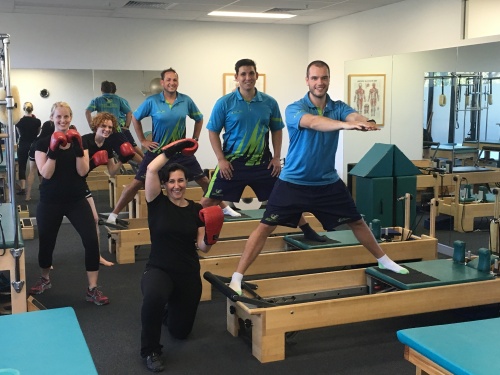
Bone adaptation is when bone tissue changes its density and internal structure to better withstand mechanical forces.
Bone adapts by:
- Increasing bone mineral density
- Improving bone architecture
- Strengthening at specific sites that experience load
Bone responds primarily to:
- Magnitude of force
- Speed of force application
- Novel or directional loading
Bone growth requires load
Improving bone density is a different physiological target than general strength.
Bones adapt primarily to mechanical loading that exceeds normal, everyday stress, meaning habitual daily activity is usually insufficient to stimulate bone changes. Heavy resistance training (often around 60-80% of 1RM) or other high-strain activities are commonly needed to exceed the bone adaptation threshold.
Muscle vs bone loading needs
While we need true external load for both, there are some notable differences. Think of it this way:
For muscle
“Burn, fatigue, control, time under tension.”
For bone
“Brief, heavy, sharp signals to the skeleton with full recovery.”
Why this all matters (and why we care!)
In women’s health, especially through perimenopause and menopause, bone adaptation matters because hormonal changes accelerate bone loss and appropriate mechanical loading is critical to preserve bone density, reduce fracture risk and support long-term independence and quality of life.
So does Pilates “count” as strength training?
Short answer… no.
BUT we all know that NOTHING is as simple as the short answer and there is nuance and complexity to this.
Let us explain…
Phases of strengthening (relating to pain management)
In pain-informed strengthening, we start with neuromuscular re-education and motor control to reduce threat, improve co-ordination and restore safety of movement then progress to controlled strength and finally higher load and capacity once the system can tolerate it without symptom escalation.
Phase 1: motor control
Phase 2: increase load
Many forms of exercise can assist with strength gains…
Most forms of movement can help in the earlier phases related to improving motor control and making strength training accessible:
- Pilates
- Yoga
- Bodyweight movements
- Functional training
- Barbell
- Machines
- Resistance bands
BUT you can build bone density changes with all of these.
…. but not all forms of exercise lead to bone adaptation
Which is why we say Pilates can NOT be your ONLY form of exercise for overall health.
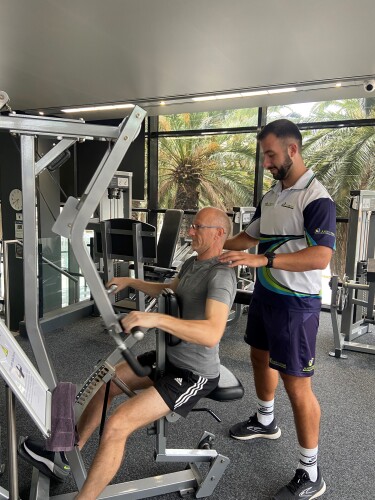
The recommended physical activity guidelines require 2x a week of 30 minutes of strength training.
Pilates does not “count” here.
The reformer can be an effective first step into exercise by offering supported, adjustable resistance to build motor control and confidence and it continues to play a role later by refining movement quality, managing load and complementing higher-intensity strength work.
This isn’t anti-Pilates… it’s physics.
Pilates can absolutely build strength, control, stability, mobility, co-ordination and endurance.
It can be progressive, challenging and deeply beneficial.
But for bone density? Springs on a reformer or cadillac have a load ceiling.
They simply cannot produce the high external forces (or directional loading) needed for bone remodelling in most people.
So there you have it… Continue with your Pilates if that is what you like, see and feel the benefits from but know that you may just need to do more! It is not enough. We need true strength training to support bone density, tendon capacity and muscle mass in order to decrease our risk of things like Osteoporosis.
A special thanks again goes out to Kate and Taylor for allowing me to reshare their content and bring it to you for your reading and if nothing else may make you take a second to do a self-check on your exercise regime and either continue as you are or make some positive changes!
Exercise is everything – keep doing it and if and when you need help – ask a fitness professional that can help you!

Leave a Reply
Want to join the discussion?Feel free to contribute!